
Roof condition · Leaks
The stain is a symptom, not a map
It is the single most common misunderstanding we meet on a roof leak. A brown ring appears on a bedroom ceiling, the assumption is that there is a hole in the roof directly above it, and a roofer is sent up to look at exactly that spot — and finds nothing wrong. The water was getting in somewhere else entirely.
Water does not fall straight down through a roof. It enters at a defect, then follows the path of least resistance — along the underside of a slate, down a rafter, across a ceiling joist, over the top of a plasterboard sheet — until it reaches a low point or a joint and finally drips. By the time it stains a ceiling it can be one, two, even several metres from where it actually broke through. On the tall period roofs across Hampstead, Highgate and Muswell Hill that horizontal travel can be considerable.
So the useful question is never “what is above the stain?” It is “where, uphill of the stain, is the roof letting water in?” These are the places we find it.
Flashings — chimneys, party walls and abutments
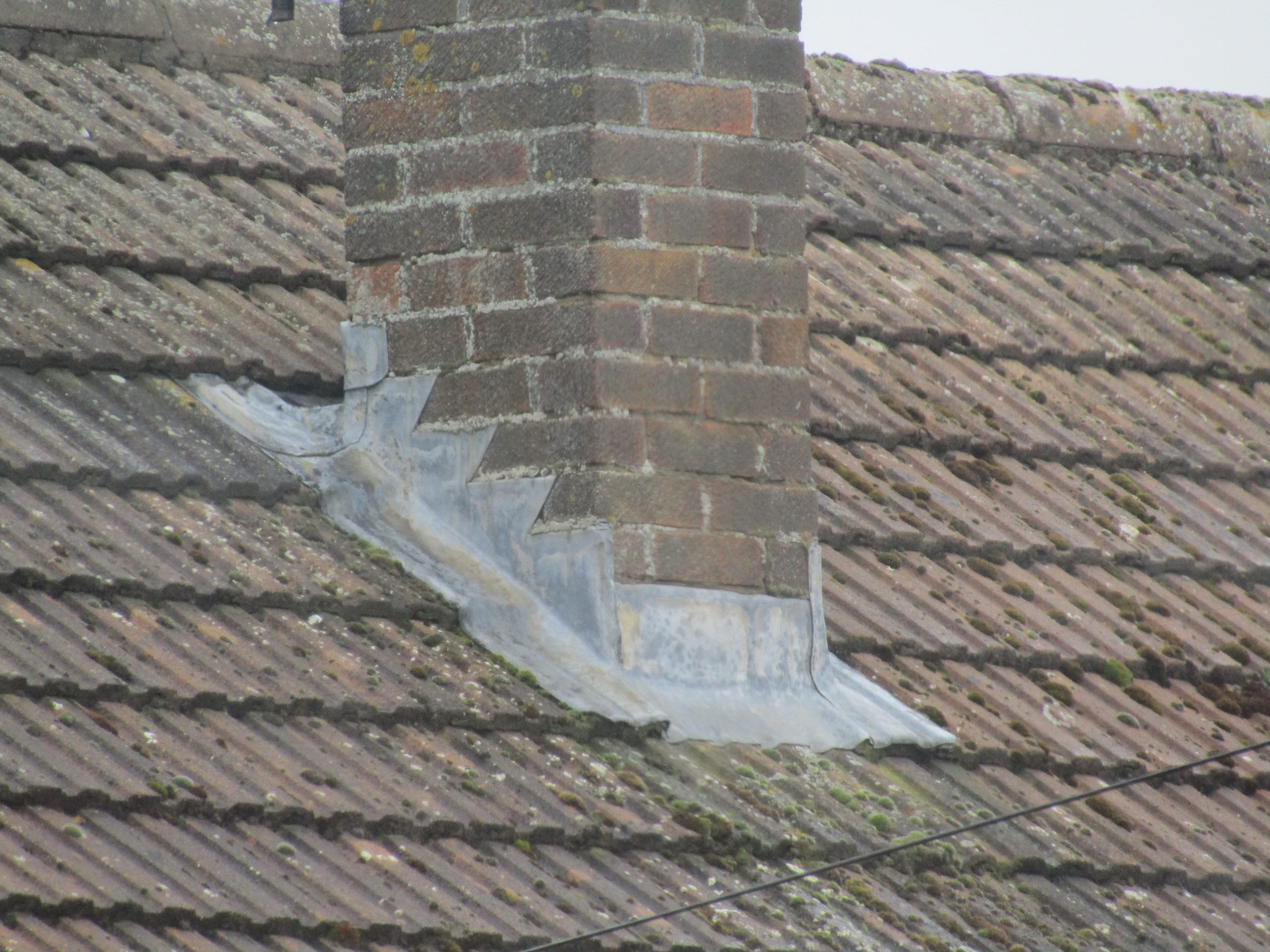
Wherever the roof meets something that sticks up through it — a chimney, a parapet, the wall of a neighbour’s taller house, a dormer cheek — the junction is sealed with flashing, usually lead. It is the busiest, most weathered detail on the whole roof, and it is comfortably the most common leak point we photograph. Lead slips out of the mortar joint it was tucked into, the pointing above it crumbles, or a previous repair in mastic or cement has cracked and let go. Water gets behind the flashing, runs down inside the wall or along the roof timbers, and surfaces well away from the chimney it came from.
Why it fools you: a chimney sits at the ridge; the stain can appear halfway down the ceiling below, nowhere near it.
Valleys and hidden gutters
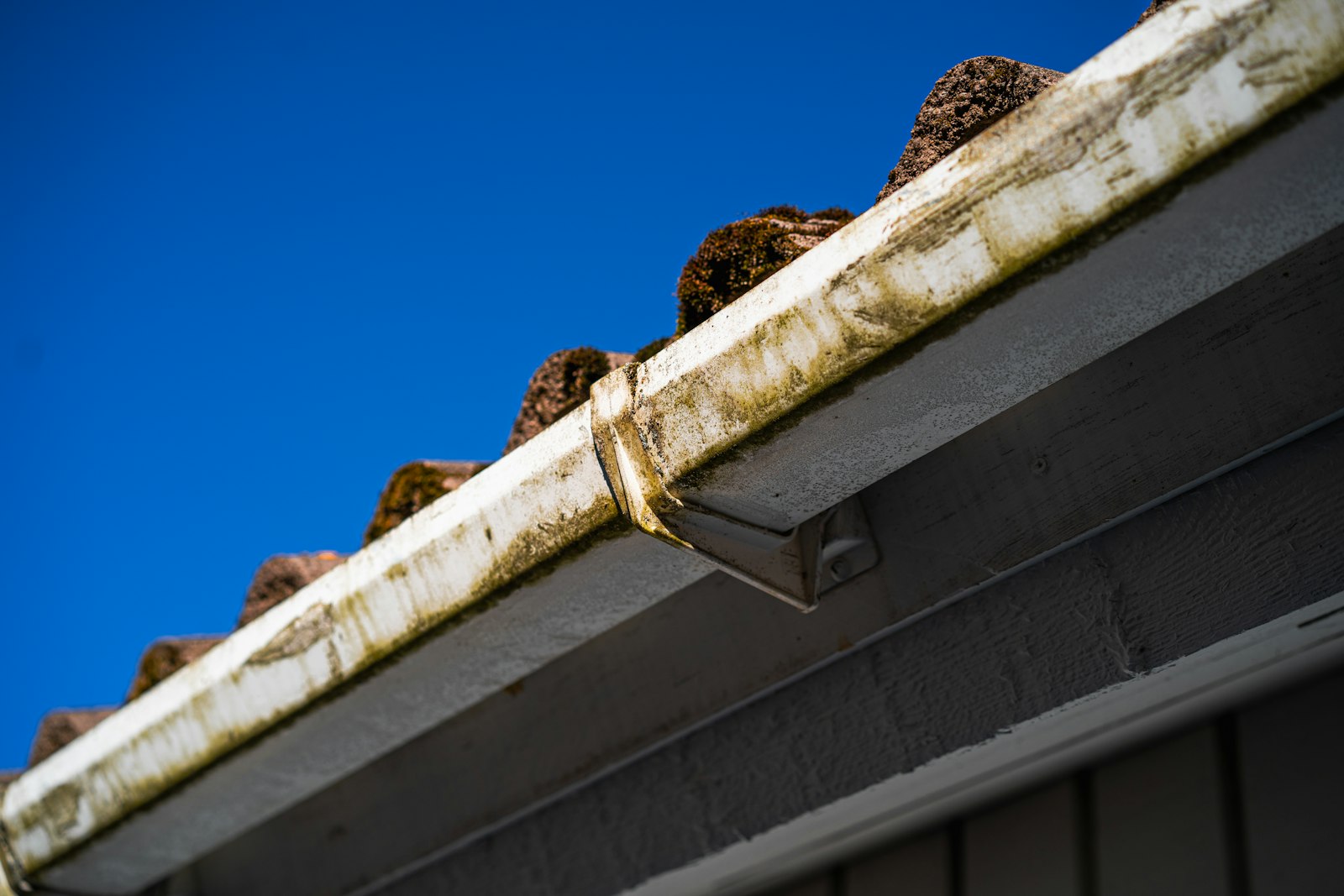
Where two roof slopes meet they form a valley, and every drop of rain landing on both slopes is funnelled down that single channel. It is the hardest-working strip of the roof. Leaves and moss build up, the valley lining corrodes or splits, or the tiles either side have crept in and choked it. On the butterfly and M-shaped roofs behind so many North London terraces, the valley is a concealed central gutter you cannot see from the street at all — and when it backs up, water spills sideways under the tiles into the roof space.
Why it fools you: a blocked valley leaks under heavy rain only, so it looks intermittent — “it only does it sometimes” is a classic valley symptom.
Slipped, cracked or missing slates
On a Victorian slate roof the nails that hold each slate eventually rust through — “nail sickness” — and slates begin to slide. One gone, or one cracked by a footfall or a falling branch, is enough to expose the felt or, on older roofs with no felt at all, the bare timber. A single displaced slate high on a slope can feed a surprising amount of water into a roof, and it will run a long way down the battens before it finds a way through the ceiling below.
Why it fools you: the gap is often on a rear or side slope invisible from the ground, so from below the roof looks perfect.
Flat roof edges, upstands and outlets
A flat roof almost never fails in the middle of the sheet. It fails at the edges — where the covering turns up against a wall, around the outlet, at a corner or a trim. A too-low upstand, a lifted lap or a leaf-blocked outlet lets water sit and then track back under the membrane. Because a rear extension or dormer roof usually abuts the main house, that water often runs straight into the junction between old and new and shows up on a ceiling inside the original building. We cover the coverings themselves in our guide to flat roof systems.
Why it fools you: the leak is on the flat roof you cannot see, but the stain is inside the two-storey house next to it.
Penetrations — vents, soil pipes and aerials
Every pipe, vent, soil stack, rooflight and aerial fixing is a deliberate hole in the roof made watertight by a collar, a soaker or a proprietary flashing. Each one is a maintenance point that perishes with age — a cracked rubber collar around a soil vent, a rooflight seal gone brittle, an old aerial bracket screwed straight through the covering and long since abandoned. Small holes, but they are directly connected to the inside of the roof.
Why it fools you: a pinhole around a pipe leaks slowly, so damage builds for months before it becomes visible.
Condensation masquerading as a leak

Not every damp patch is rainwater. Warm, moist air from the house rises into a cold, poorly ventilated roof space, meets the cold underside of the covering, and condenses — then drips exactly like a leak. A meaningful share of the “leaks” we are called to look at, especially on well-sealed modern loft conversions and blocked cold-deck flat roofs, turn out to be interstitial condensation. It matters, because no amount of re-pointing or re-flashing will ever fix it; the answer is ventilation, not waterproofing.
Why it fools you: it appears in cold snaps rather than during rain — the opposite pattern to a true leak.
The reason it is so hard to pin down
Why water travels before it shows
Once water is through the outer covering it is inside a structure that is full of slopes and channels. It clings to the underside of a slate and runs down to the batten. It follows a rafter to the wall plate. It pools on a felt sag until the felt gives way at a nail hole. It creeps across the top face of a ceiling and only drops where it meets a light fitting, a joint in the plasterboard or a downlight cut-out. Each of those hand-offs moves the eventual drip further from the true entry point.
This is exactly why a roof can leak with no visible damage from the ground, and why guesswork repairs so often miss. Reseal the spot below the stain and, because that was never the entry point, the leak simply returns with the next spell of driving rain. The only reliable fix is to find the actual defect — which means getting a clear, close look at the whole roof surface, especially the parts you cannot see.
From above
How a drone traces a leak back to its source
Working out where a leak starts is a process of ruling places out, and that needs eyes on every flashing, valley, slate and junction — including the rear slopes, hidden valleys and flat-roof edges that are invisible from the street and unreachable without scaffold or a roof ladder. A drone puts a high-resolution camera directly over all of it in under an hour, with nobody on the roof.
We photograph the whole covering, then work uphill from where the water appears inside: the state of the lead around every chimney and abutment, whether the valleys are running clear, any slipped or cracked slates on the slopes above the stain, the condition of every flat-roof upstand and outlet, and each pipe and vent penetration. You get an annotated report the next day showing the likely entry point and the evidence for it — so a roofer is sent to the right spot, once. It is far cheaper than repeat access, as our cost breakdown sets out, and a drone survey is as accurate as a physical inspection for surface defects like these.
If you would rather not guess where the water is getting in, we can take a look. Get a free quote or message us on WhatsApp — most surveys are booked within 48 hours, and your annotated report follows the next day.
We are CAA-registered and fly to national standards; roof detailing throughout follows established NFRC good practice. If you have spotted a stain, it is also worth reading how quickly you should act — a small leak left alone becomes rotten timber sooner than most people expect.